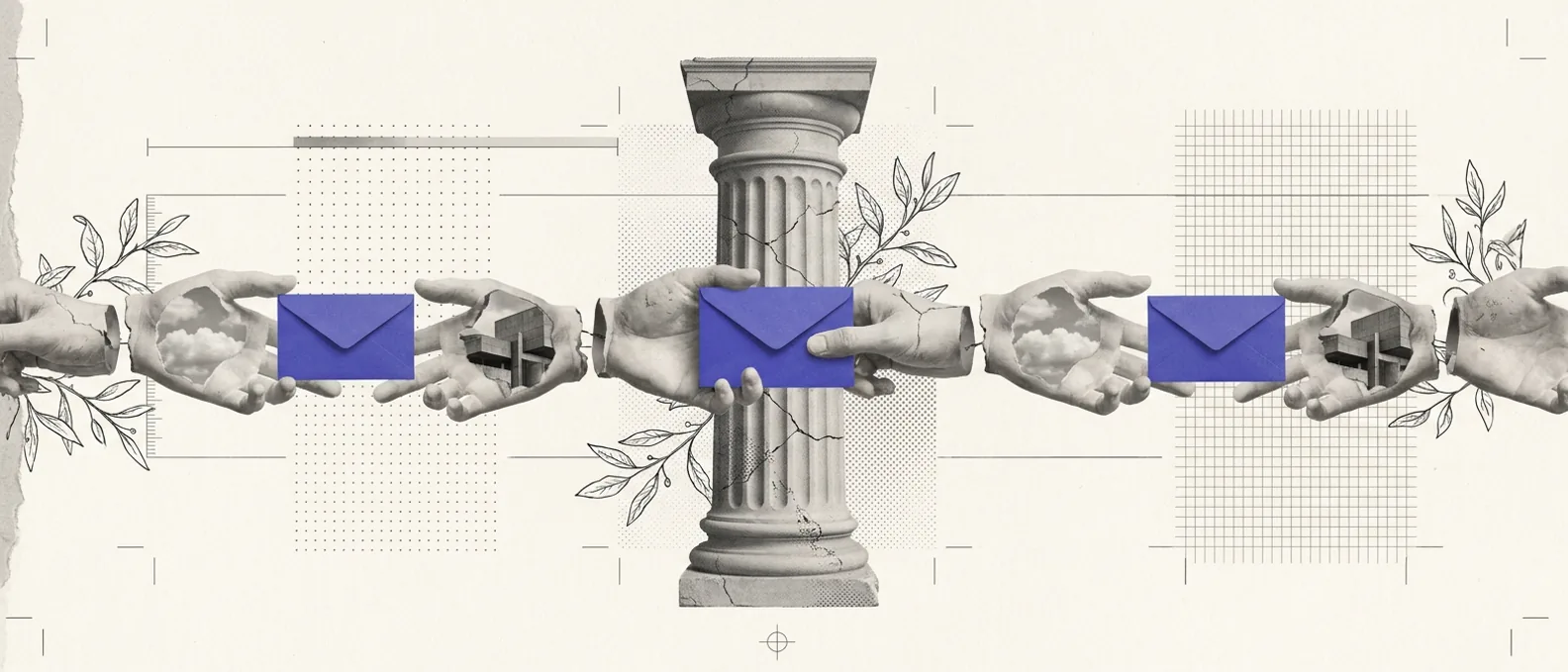


- Gmail and Yahoo now hold bulk senders to SPF, DKIM, and DMARC, one-click unsubscribe, and a spam-complaint rate under 0.3%. [7]
- Miss those and mail is throttled or rejected. Deliverability is a prerequisite now, not an ops chore. [7][8]
- The winning structure is behavior-led flows (welcome, cart, post-purchase, re-engagement), not a bigger send calendar. [4]
- AI’s real shift is predictive orchestration of timing, triggers, and audiences, with copy as one part of the system. [1]
- Treat vendor return-on-investment (ROI) claims like “15-25% lower churn” as directional until your own cohort data confirms them. [5]
For a decade, the email plan was a calendar. You picked the sends, filled the slots, and measured the opens. In 2026 that program is quietly failing on two fronts at once. The mailbox providers now decide whether your mail arrives at all, and your best revenue comes from messages you never scheduled. Both shifts point the same way: away from the broadcast blast, toward a system that reacts to the customer.
Deliverability is the entry fee now
Start with the part you no longer control. Since February 2024, Gmail and Yahoo hold any sender above 5,000 messages a day to Gmail to a hard set of rules: authenticate every message with SPF, DKIM, and DMARC, offer one-click unsubscribe on marketing mail, and keep the spam-complaint rate reported in Postmaster Tools below 0.3%. [7] Yahoo enforces a parallel bar. [8] These are not best practices you get to phase in. Miss them and mail is throttled, and since late 2025 Gmail rejects a share of non-compliant bulk traffic outright. [7]
Those dates set the rules. One number decides whether you keep clearing them.
That complaint rate is the number underneath everything, and it is unforgiving. It makes list hygiene, bounce suppression, and complaint monitoring a product capability, not a quarterly cleanup. Track bounce rate, spam-complaint rate, and unsubscribe reasons as the leading indicators of domain health, because by the time deliverability drops in your dashboards, the reputation damage is already done. [4] Email is the channel you own outright, which is exactly why it matters more as third-party signal erodes. The same first-party discipline behind consent-mode planning applies here: a clean, consented, engaged list is the asset, and a bought or stale one is a liability that can sink the domain it sends from.
The program is a lifecycle, not a calendar
With delivery handled, the growth is in flows, not campaigns. A broadcast send treats every subscriber the same on the sender’s schedule. A lifecycle flow fires on the customer’s behavior: a signup, a browse, an abandoned cart, a first purchase, or a lapse into silence. One 2026 automation guide sets a minimum viable set of four flows to build before anything else. [4] The cadence below is one playbook’s version, a reasonable default to adapt rather than a law. [6]
| Flow | Fires on | Cadence |
|---|---|---|
| Welcome | new subscriber | immediately |
| Abandoned cart | cart left idle | 1 hour, 24 hours, 72 hours |
| Post-purchase | order placed | 3 days, 2 weeks, 1 month |
| Re-engagement | 30+ days quiet | day 30, 60, 90 |
The cadences above are the timing. Which flows to stand up, and in what order, is the more consequential call.
Welcome and onboarding to set the relationship. Abandoned cart as a three-touch sequence, not a single reminder. Replenishment tied to the product’s reorder cycle. A milestone or anniversary flow to keep the list warm. Everything past that is optimization, not foundation. [4]
The cart flow is where this pays first. A three-touch abandoned-cart sequence recovers revenue a weekly newsletter never touches, and it compounds with the same on-site testing behind e-commerce conversion work. Keep the plumbing straight while you build it: the customer relationship management (CRM) system is where the customer record lives, and the automation layer is what watches behavior and sends the message. [2] Confuse the two and you end up with a fast sender bolted to a stale contact list, which is how a compliant setup still ruins its complaint rate.
What AI actually changes
The loudest AI story in email is the wrong one. Faster copy is real, but it is the smallest change. The defensible shift is upstream, in the decisioning: models choosing the trigger, the send time, the audience, and the creative variant inside a flow. Klaviyo frames the direction as automation moving from scheduled workflows to self-optimizing systems that plan, execute, and adjust in real time. [1] Monocle puts the plainer version of the claim: automated lifecycle flows outperform campaign-first programs. [3]
That reframes the human job rather than removing it. The work moves from writing the Tuesday email to defining the flows, the guardrails, and the metrics the system optimizes against, the same split between humans and AI showing up across marketing operations. Keep people on the two-variant subject-line test and the brand voice. Let the system handle timing and selection at a scale you cannot hand-tune. [4]
The ROI line to distrust
Which brings up the numbers you will see in vendor decks. One email-tooling vendor claims that companies with mature lifecycle email see 15-25% lower churn and 20-30% higher expansion revenue than broadcast-only programs. [5] The direction is plausible and matches most practitioners’ experience. The specific figures are not tied to a named benchmark or an auditable cohort, so treat them as a single vendor’s framing, not a planning input. The honest version of email ROI is the one you can reconstruct from your own sends.
- Pass the entry exam first: SPF, DKIM, DMARC, one-click unsubscribe, and a complaint rate under 0.3%. [7]
- Watch bounce, complaint, and unsubscribe rates as leading indicators, not lagging reports. [4]
- Build the four core flows before scheduling another campaign. [4]
- Keep the CRM record and the automation layer in sync. Behavior drives the send. [2]
- Point AI at timing, audience, and selection; keep humans on voice and guardrails. [1]
- Rebuild any vendor ROI claim from your own cohort before you budget against it. [5]
The blast still technically works, right up until the inbox stops delivering it. The programs that win in 2026 are the ones that earn their way in, then let behavior, not the calendar, decide what sends.
Sources
- Klaviyo · Marketing automation trendsvendor blog; used for the self-optimizing-systems direction, not a benchmark
- Venture Harbour · Best marketing automation CRM
- Monocle · How AI is changing lifecycle strategy
- InsiderOne · Email marketing automation strategies and examples
- Sequenzy · Best email tools for SaaS lifecycle marketingsingle vendor’s own framing; the 15-25% and 20-30% figures are unverified against a named benchmark
- Etzal Group · Email marketing automation in 2026one agency’s recommended flow cadence; adapt to your data
- Google · Email sender guidelinesfirst-party: the 5,000/day threshold, SPF/DKIM/DMARC, one-click unsubscribe, and the 0.3% spam-rate ceiling
- Yahoo · Sender best practicesfirst-party: Yahoo’s parallel bulk-sender requirements
Frequently asked questions
What do Gmail and Yahoo require from bulk email senders in 2026?
Anyone sending more than 5,000 messages a day to Gmail must authenticate every message with SPF, DKIM, and DMARC, offer one-click unsubscribe on marketing mail, and keep the spam-complaint rate reported in Postmaster Tools below 0.3%. Google advises staying under 0.1% for headroom. Yahoo enforces a parallel set of requirements. Miss them and mail is throttled, and since late 2025 Gmail rejects a share of non-compliant bulk traffic outright.
What is the difference between broadcast email and lifecycle automation?
A broadcast campaign sends the same message to everyone on the sender’s schedule. A lifecycle flow fires on the customer’s behavior: a signup, a browse, an abandoned cart, a first purchase, or a lapse into silence. Lifecycle flows compound because they reach a person at the moment their intent is highest, rather than when a calendar slot came due.
Which email flows should I build first?
One 2026 automation guide names a minimum viable set of four before anything else: welcome and onboarding, abandoned cart (a three-touch sequence, not a single reminder), replenishment tied to the product’s reorder cycle, and a milestone or anniversary flow. Everything past that is optimization, not foundation.
How is AI actually changing email production in 2026?
The largest change is not faster copy. It is predictive orchestration: models choosing the trigger, the send time, the audience, and the creative variant inside a flow, with copy generation as one component of the system. The human job shifts from writing the Tuesday email to defining the flows, the guardrails, and the metrics the system optimizes against.
Can I trust vendor claims that lifecycle email lifts revenue?
Treat them as directional. One email-tooling vendor claims mature lifecycle programs see 15-25% lower churn and 20-30% higher expansion revenue than broadcast-only programs, but the figures are not tied to a named benchmark or an auditable cohort. Model your own lift from your own before-and-after data before you budget against a number.
What happens if my spam-complaint rate goes over 0.3%?
You lose the headroom the mailbox providers give compliant senders. A sustained complaint rate above 0.3% in Postmaster Tools costs eligibility for mitigation, mail gets throttled, and since late 2025 Gmail moves non-compliant bulk traffic to temporary and permanent rejections. Google advises staying under 0.1% because a few bad sends can tip a domain into filtering that takes weeks to recover from.
How many messages should an abandoned-cart flow send?
Build it as a three-touch sequence, not a single reminder. One playbook’s default fires at 1 hour, 24 hours, and 72 hours after the cart is left idle, a cadence to adapt to your data rather than a law. The cart flow is usually where lifecycle automation pays first, recovering revenue a weekly newsletter never touches.
Which metrics warn of email deliverability problems early?
Track bounce rate, spam-complaint rate, and unsubscribe reasons as leading indicators of domain health. By the time deliverability drops in your main dashboards, the reputation damage is already done, so these are the numbers to watch rather than lagging reports. That is what makes list hygiene and complaint monitoring a product capability, not a quarterly cleanup.
What are SPF, DKIM, and DMARC in email?
They are the three email-authentication standards Gmail and Yahoo now require of bulk senders. SPF lists which servers may send for your domain, DKIM cryptographically signs each message so tampering shows, and DMARC tells receivers what to do with mail that fails the first two. Without all three in place, mail from a domain sending more than 5,000 messages a day to Gmail is throttled or rejected.
Who has to meet the Gmail and Yahoo bulk-sender rules?
Anyone sending more than 5,000 messages a day to Gmail, plus Yahoo’s parallel bar. Below that volume the requirements are still good practice. Above it they are enforced. You must authenticate with SPF, DKIM, and DMARC, offer one-click unsubscribe on marketing mail, and keep the spam-complaint rate in Postmaster Tools under 0.3%, with Google advising under 0.1% for headroom.
Should the CRM or the automation platform own the customer record?
The CRM holds the customer record, and the automation layer watches behavior and fires the message. Confuse the two and you bolt a fast sender onto a stale contact list, which is how a technically compliant setup still ruins its spam-complaint rate. Keep the record and the automation in sync so behavior, not a calendar, decides what sends.

Mikołaj Salecki
Writes about media, tech, and AI business for people who actually run digital. Former agency lead. Skeptic of frameworks that read better than they perform.